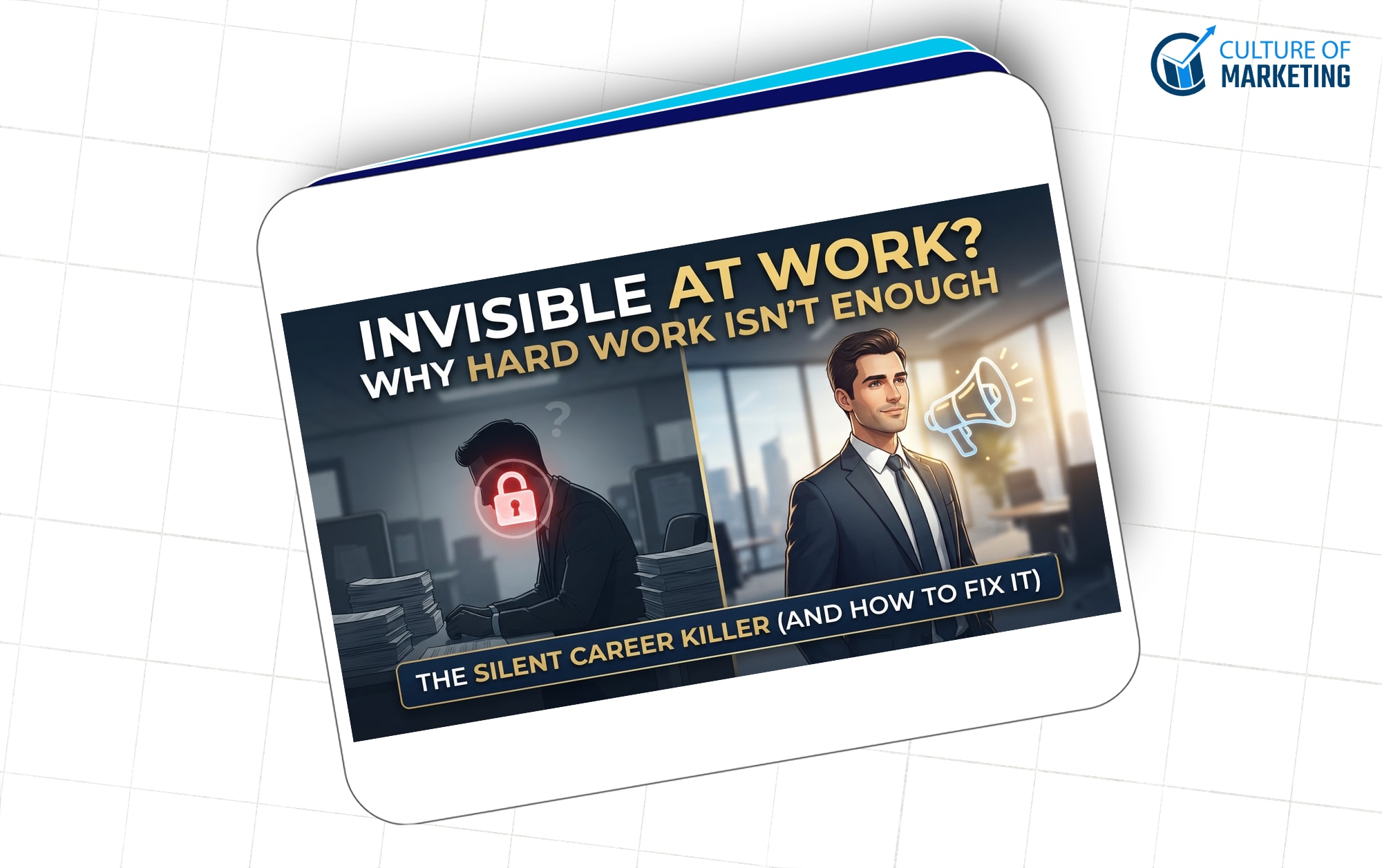
The Silent Career Killer
Nobody told me this was going to matter.
I spent years thinking the formula was simple — get good at something, work hard, deliver results, and the right people would eventually notice. That's what everyone said—teachers, parents, and first managers. Keep your head down. Do good work. It'll pay off.
And maybe that worked once. I don't know. But I can tell you it doesn't work the way people think it does anymore.
I've watched people — genuinely talented, hardworking people — get passed over again and again for someone who, on paper, shouldn't have beaten them. Less experienced sometimes. Not obviously smarter. But somehow always the one getting the call, landing the client, getting the promotion.
For a long time, I thought it was luck. Or nepotism. Or some invisible thing I wasn't seeing.
It wasn't any of that. It was simpler and more annoying than that.
The other person was known. And my talented, hardworking friend was not.
This Is Going to Sound Obvious — But Stick With Me
People hire, promote, and refer people they know. Or at the very least, people they feel like they know.
That sounds so basic that you're probably nodding and moving on. But I want you to actually sit with it for a second because the implications are kind of uncomfortable.
It means being good at your job — actually good, not just okay — is not enough on its own. It means the person who is slightly less skilled but way more visible than you will, in many situations, beat you. It means the work you're so proud of, the stuff you've poured real effort into, might be completely invisible to the people who could change your career.
That's the silent part. Nobody tells you this is happening. You just keep working hard and wondering why things aren't moving the way you expected.
I'm not saying the world is fair. It's obviously not. But I am saying there's something you can actually do about this particular unfairness, and most people aren't doing it.
The Thing Everyone Gets Wrong About Personal Branding
Okay, here's where I have to be careful because the term "personal branding" makes a lot of smart people immediately check out. And I get why.
The personal branding content online is, a lot of it, genuinely terrible. There's a whole genre of LinkedIn posts that's basically just someone narrating a mildly inconvenient experience and then going, "and THAT'S when I learned the true meaning of leadership." There are coaches selling courses on "building your authentic brand" who have never built anything except their course funnel. There's a general vibe of performative hustle and vulnerability that feels hollow the second you look at it closely.
So when people hear "personal branding," they think of that stuff, and they want nothing to do with it. Which is completely reasonable.
But here's what personal branding actually is when you strip away all the noise.
It's just — what do people think when they hear your name?
That's literally it. Do people associate your name with something specific and valuable? When a relevant opportunity comes up, does your name come to mind? When someone needs what you're good at, do they think of you?
If yes, you have a personal brand. If no, you don't. And the absence of one is costing you things you don't even know you're missing — because you never see the opportunities that go to someone else before they ever reach you.
The Compounding Thing That Keeps Me Up at Night
There's something about personal brands that I think people don't fully appreciate, and it's this — they compound. Hard.
Someone who started building their presence three years ago has three years of content sitting online. Three years of people coming across their name and thinking, "oh I've seen their stuff, they seem to know what they're talking about." Three years of slow trust-building are happening in the background while they sleep.
Every piece of content they put out sits there working for them indefinitely. Every person who finds them and thinks "this is useful" is one more person who might recommend them, hire them, or refer them to someone else.
And here's the part that genuinely bothers me — while that's happening for them, nothing is happening for the person who decided to wait until they felt ready. The gap between the two isn't staying the same. It's growing every single week.
I don't say that to be harsh. I say it because I wasted a couple of years thinking I'd get to this eventually, when conditions were better, when I had more time, when I felt more confident about what I wanted to say. And all that time I was just handing the advantage to people who decided to start before they were ready.
Why The People Who Need This Most Are Usually The Most Resistant
This is the pattern I keep seeing, and it's kind of ironic.
The people who would benefit most from building a personal brand are often exactly the people who are most uncomfortable with the idea. They're the ones who are genuinely skilled, who have high standards, who care about quality — and who cringe hard at anything that feels like self-promotion.
They think of personal branding as bragging. Or as performing some fake version of yourself for an audience. They have this idea that if you're really good, you shouldn't need to market yourself — the work should speak. The same idea applies to companies as well. Some of the world's most valuable brands don't rely on constant promotion to look premium. Instead, they earn that perception through consistency, trust, and reputation—a concept explored in Why Brands Always Feel the Most Expensive.
And I understand that instinct, I really do. It comes from a good place. It comes from actually caring about craft and substance over hype.
However, there's an uncomfortable flip side to that belief.
If you genuinely know things that could help people — and if you're as good as you think you are, you do — then keeping that knowledge invisible isn't some kind of noble modesty. You're just making yourself hard to find for the exact people who need what you have. That's not humility. That's just unhelpful.
The good news is that building a real personal brand doesn't require becoming a different person. It doesn't require pretending your life is perfect or manufacturing a personal story or doing things that feel fake. It just requires being willing to share what you actually know, in your actual voice, consistently enough that people start to recognize your name.
The Mistakes That Kill It Before It Starts
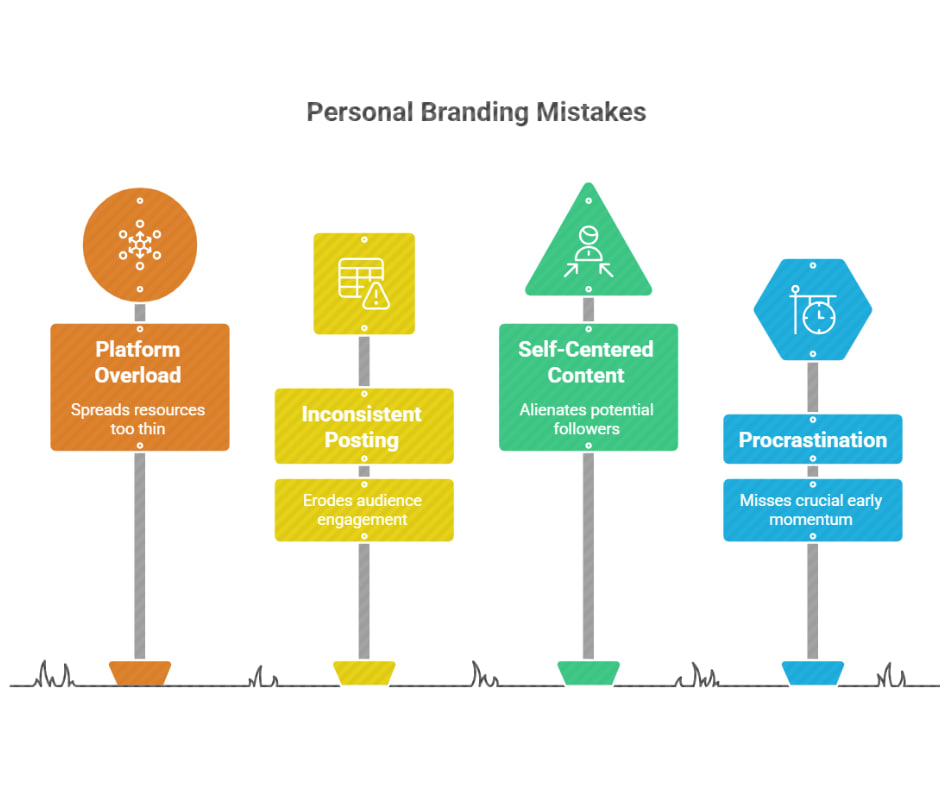
Most people who try to build a personal brand and fail make the same few mistakes. I've made most of them personally.
The biggest one is trying to be everywhere at once. You decide to do LinkedIn and Twitter, and Instagram, a newsletter, and maybe a podcast and within about six weeks, you've burned out completely and abandoned all of it. Then you conclude that personal branding doesn't work, when actually you just spread yourself too thin.
Pick one place. The place where the people you want to reach actually spend time. Build there until it's actually working before you think about expanding anywhere else.
The second mistake is making it about yourself. "Here's my journey." "Here's what I've achieved." "Here's a lesson from my life." People don't care about you yet — and that's just honest. They care about what you can do for them, what problems you can help them solve, and what you know that they don't. Lead with usefulness. The audience follows usefulness, not autobiography.
The third mistake is inconsistency. Posting five times in a week when you're feeling motivated, then disappearing for three weeks when life gets busy, then coming back with an apology post about where you've been. Nobody trusts an inconsistent presence. It signals that you can't be relied on, which is the exact opposite of what a personal brand is supposed to do. One post a week, every week, beats five posts one week and nothing for a month. Every time.
And the last one — waiting until you feel ready. There is no ready. Seriously. Every person you follow online who seems confident and polished and like they always know what to say — they started awkward and uncertain and kind of embarrassing. The difference between them and the people who never built anything is just that they kept going through that phase instead of stopping because it felt uncomfortable.
What Actually Works — Without Overcomplicating It
Get specific about what you want to be known for. This is the step most people skip, and it's the most important one. "Marketing" is too broad. "Business growth" means nothing. "Email marketing for Shopify brands doing under a million a year" — now we're talking. The more specific you are, the faster the right people find you and the more useful you are to them when they do.
Write as you talk. Seriously. Read your content out loud. If it sounds like something a corporate press release would say, rewrite it until it sounds like you are actually explaining something to a friend. People can feel the difference between a human voice and a polished-for-approval voice, and they respond to the human one.
Share things that are actually useful. Opinions. Lessons learned the hard way. Mistakes you made and what they cost you. Things you've noticed that other people in your space aren't talking about. Stuff that makes someone reading it think, "okay, I actually learned something there." That's the content that builds real trust.
Show up consistently. Not every day — that's not sustainable for most people. But regularly. Weekly is the floor. Make it a habit, the same way anything else important in your work life is a habit.
And then — this is the part nobody wants to hear — be patient. The first few months of building a personal brand feel like shouting into an empty room. Almost no engagement, no growth, no sign that anyone is paying attention. That phase is completely normal, and it's exactly where most people quit. The ones who push through it are the ones who end up with something real.
Here's Where You Actually Are Right Now
You already have a personal brand. I want to be really clear about that.
Every interaction you have, every email you send, every piece of work you deliver — it's all building an impression somewhere in someone's head about who you are and whether you can be trusted and what you're good at. That impression exists whether you've thought about it or not.
The problem for most people isn't that they have no personal brand. It's that their personal brand is confined to a tiny circle of people who already know them. Beyond that circle, they're invisible. And invisibility, in a world where the people making decisions are overwhelmed with options, is a real problem.
Building a personal brand just means extending that reputation outward. Letting people who haven't met you yet — future clients, future employers, future collaborators — start to understand who you are and what you stand for before you ever have a conversation with them.
It doesn't require a big personality. It doesn't require being an extrovert or a natural performer, or someone who loves being the center of attention. It just requires being willing to share what you genuinely know, in a voice that sounds like you, on a regular enough basis that it starts to accumulate into something.
Most people won't do this. They'll read something like this, nod along, think "yeah, I should really do that," and then not do it. Which — if you're the person who actually starts — is genuinely good news for you.
The field is less crowded than it looks. The bar for showing up consistently and saying something real is lower than you think.
The only question is whether you're going to be one of the people who do it.