Why Everyone Is Building a Personal Brand
For a long time, "personal branding" was a phrase I couldn't take seriously. Every time I heard it, I pictured someone in a ring light recording themselves saying things like "your network is your net worth" while wearing a blazer over a t-shirt. It felt performative. Exhausting. Like something only narcissists and LinkedIn power users actually did. Then I started paying attention to outcomes.
The freelancer in my network who never seemed to struggle for clients — personal brand. The guy who got poached by three different companies in one year without applying to a single job — personal brand. The consultant who raised her rates by 60% and somehow got more inquiries after doing it — personal brand. I kept seeing the same pattern. The people who were building something around their name were consistently winning. Not sometimes. Not occasionally. Over and over again.
And at some point, you have to stop calling it luck.
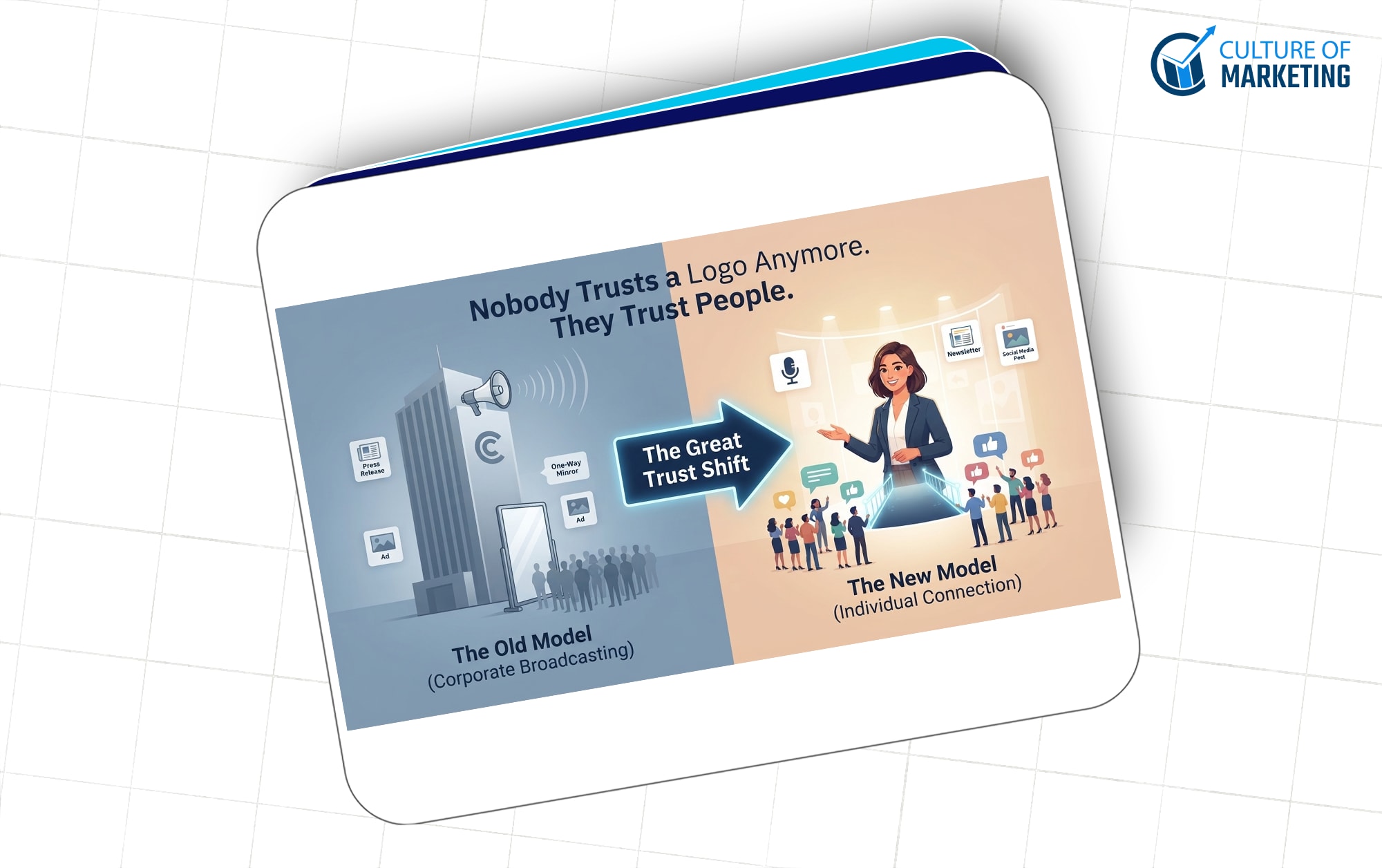
Nobody Trusts a Logo Anymore. They Trust People.
Think about the last time a corporate ad actually moved you. It really made you feel something. Hard to remember, right? That's not an accident. We've been marketed so aggressively for so long that most of us have developed genuinely impressive built-in filters. We skipped the pre-roll. We scroll past the sponsored post. We've seen enough "authentic brand storytelling" to know exactly how fake it usually is. But we still trust people.
Not celebrities endorsing products. Not influencers with paid partnerships in every other post. Real people — people who show up consistently, share what they actually know, have opinions that aren't committee-approved, and talk like a human being instead of a press release. The Edelman Trust Barometer has been tracking this for years. Consumers trust individuals more than they trust corporations. That gap isn't closing — it's widening. And it has enormous implications for anyone trying to build a career or a business in this environment. Because here's what that means practically: if people find your company's content and your personal content side by side, they're more likely to trust you. The human. Every time. This shift is exactly why real stars today are no longer limited to Hollywood celebrities—they're creators, experts, and professionals who earn trust through consistent value. Your personal brand is how you show up as that human — consistently, clearly, and credibly — before anyone ever has a reason to doubt you.
Let's Clear Up What a Personal Brand Actually Is
Because I think a lot of people get this wrong, and it's why they approach it the wrong way. Your personal brand is not your headshot. It's not your color palette or your content pillars or your posting schedule. Those are tools. Your brand is something deeper — it's the specific thing people think of when your name comes up. It's the answer to: "Oh yeah, she's the one who does ___."
Jeff Bezos said it better than anyone: your brand is what people say about you when you're not in the room. Personal branding just means you've been deliberate about what that sentence sounds like — instead of just hoping it works out. In real terms, here's what a personal brand actually looks like when it's working:
You own a specific lane. Not "I do marketing." More like "I help DTC brands fix their email retention problem." The more specific, the more memorable. This feels counterintuitive but it works every time.
People recognize your voice. Your newsletter, your posts, your comments — they have a consistent energy. People know it's you before they see your name.
You have opinions. Not hot takes for engagement bait. Genuine perspectives, things you actually believe, frameworks you've developed from real experience. That's what makes someone worth following versus just worth looking up.
You show up often enough to stay in people's heads. Not constantly. Not obsessively. But regularly enough that when something relevant comes up in someone's world, your name surfaces naturally.
Why Is Everyone Doing This Right Now?
Fair question. Personal branding isn't new — but the urgency around it definitely is. Here's what's actually driving it.
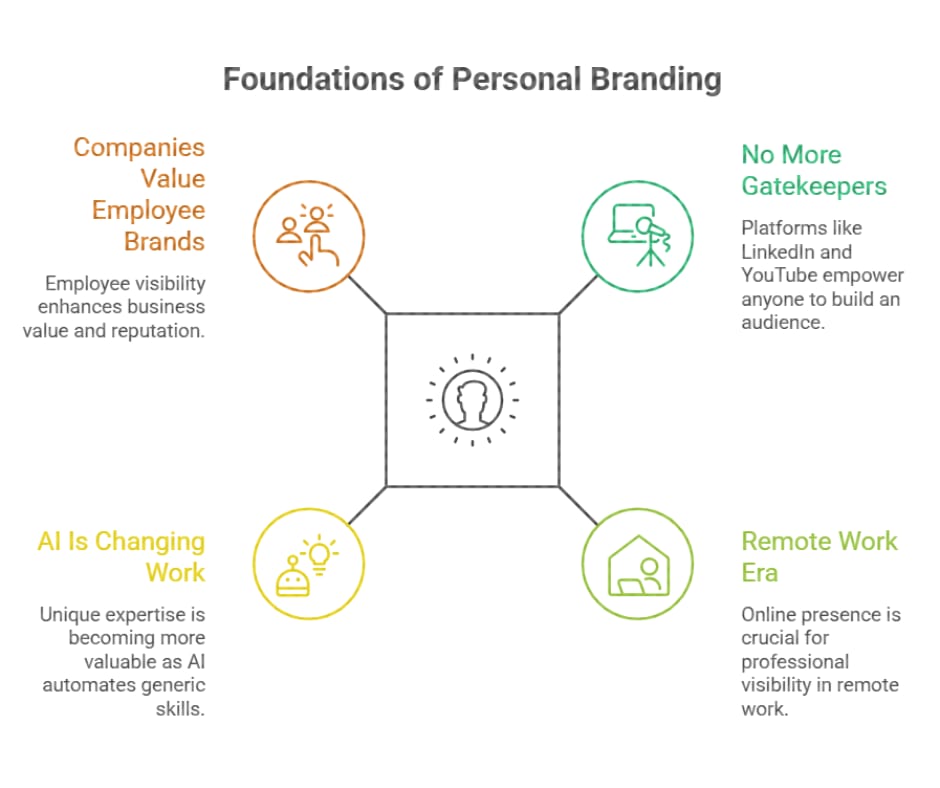
The old gatekeepers don't exist anymore
Getting your ideas in front of a large audience used to require getting past someone — an editor, a network executive, a publisher. Most people never made it through. The barrier kept the conversation small and controlled.
That's done. LinkedIn, YouTube, Substack, podcasting, TikTok — all of them have handed distribution to anyone willing to actually use them. The audience is there. The tools are free. The only thing standing between you and real visibility is whether you decide to show up.
Most people still haven't decided. That's the window you have right now.
Remote work made your digital presence your actual presence
Here's something the pandemic accelerated faster than anyone expected: if you weren't visible online, you essentially weren't visible at all. The casual hallway conversations, the conference networking, the "let me introduce you to someone" moments over dinner — all of that moved into digital spaces. LinkedIn. Twitter. Slack communities. Virtual events. And the people who had been consistently building their online presence before all of that happened? They had a head start that's compounded dramatically in the years since.
Your digital footprint is your professional reputation now. That's just true.
AI is eating generic skills — but it can't eat you
This one deserves more attention than it gets. AI tools are genuinely impressive at a lot of things. Writing. Summarizing. Designing. Analyzing. The economic value of being "pretty good" at a skill is falling fast, and it's going to keep falling.
What AI can't replicate is specific. You've earned judgment from years in the industry. The relationships you've built. The way you think about problems. Your aesthetic sensibility. Your story. Your reputation. The professionals who will hold their value — and their rates — in the next decade are the ones who are known. Not just skilled. Known. Building a personal brand today is partly a career strategy and partly a hedge against a future where generic expertise is worth a lot less than it used to be.
Companies have started treating employee brands as assets
Not long ago, a lot of companies quietly discouraged employees from building personal platforms. Too risky. Too distracting. What if they leave?
The smarter companies figured something out: an employee with a real audience in the right niche is worth more than any paid campaign they could run. Organic reach. Authentic credibility. Real trust with real people. You can't buy that. You can only grow it. So if you're building your personal brand while working somewhere, you're not necessarily creating a conflict. You might actually be creating value — for yourself and for your employer.
What You Actually Get Out of It
Let's be concrete, because "build your brand" without talking about the outcomes is just motivational noise.
You charge more. Not because you got a new certification. Because your reputation is doing the selling work before you even get on a call. Trust has a dollar value.
The right clients come to you. When someone finds your content, reads it for weeks, decides they trust your thinking, and then reaches out — that's a completely different sales conversation than cold outreach. They've already decided. You're just confirming.
You stay recruitable without looking. Interesting, visible people get approached. Quietly competent people wait. If your next opportunity is going to find you, it needs to be able to see you.
Unexpected doors open. Speaking invitations. Podcast appearances. Collaborations. Advisory roles. Press mentions. These things happen to visible people. They tend not to happen to people who aren't.
The work compounds. This is the part that makes personal branding genuinely different from almost any other investment of time. A post you wrote eighteen months ago might still be bringing people into your world today. It doesn't stop working when you stop paying attention to it. That's not how most things work.
The Mistakes That Actually Kill This Before It Starts
Most people who "tried" personal branding and quit made one of these mistakes. A lot of them made several.
They talked to everyone. If your content is for everyone, it actually connects with almost no one. Counterintuitive, but true. The narrower your lane, the faster the right people find you and the more they trust you when they do.
They quit during the ugly early phase. The first few months of building an audience feel completely thankless. You're posting thoughtful things and getting eight views. This is normal. It's the unglamorous tax that everyone who eventually builds something real has to pay. Most people bail here. Don't be like most people.
They copied someone who was working. You can study what works. You cannot borrow someone else's voice and expect it to land — because the market already has that person and doesn't need a second one. What the market doesn't have is your specific perspective, experience, and personality. That's actually your competitive advantage, if you let it show up.
They waited to feel ready. Nobody who built something real started from a place of confidence. They started from a place of "I have something worth sharing, and I'm going to figure the rest out." The confidence came later, from the doing. Waiting for it first is waiting forever.
How to Actually Start — For Real This Time
Define your lane in one sentence. What do you know well? What do people actually need help with, and who specifically are those people? That intersection is your positioning. Write it down.
Pick one platform. Just one. B2B professional? LinkedIn. Creative or visual industry? Instagram or TikTok. Writer or thinker? Substack or X. Go deep before you go wide. Own something before you expand.
Publish consistently, not constantly. Once a week of genuinely useful content is dramatically better than daily filler. People remember quality. They unfollow noise.
Be a person, not a publisher. Reply to comments. Start conversations. Engage with other people's content thoughtfully. The relationships built in comment sections and DMs are often more valuable than the audience numbers.
Give it six real months before you evaluate. Not six posts. Six months of consistent, genuine effort. Almost everyone who does this sees something real start to happen. Almost everyone who quits does so at month two.
Here's the Part Nobody Wants to Say Out Loud
Not building a personal brand isn't a neutral decision. It's a choice to let other people define the conversation about your space while you stand by and watch. Every week you're not showing up, someone else is. Not better than you, necessarily. Just more visible.
The frustrating and exciting truth is that it's not too late. Every platform still rewards people who show up with consistency and something actually worth saying. The opportunity is real, and it's still early in almost every niche.
Your personal brand is the one thing in your professional life that is completely, entirely yours. No company can restructure it. No layoff can take it. No market shift can make it irrelevant if you've built it well. Start building it as it matters. Because it really, genuinely does.